Lain Gali

Search

  • Home
Home » Much » We must lower our emissions or will lose much of our food supply - Sustainability Times
By Jihan Sari Tuesday, May 25, 2021 Much

We must lower our emissions or will lose much of our food supply - Sustainability Times

The continuous growth of greenhouse gas emissions may create new conditions, to which farmers may not be able to adapt.
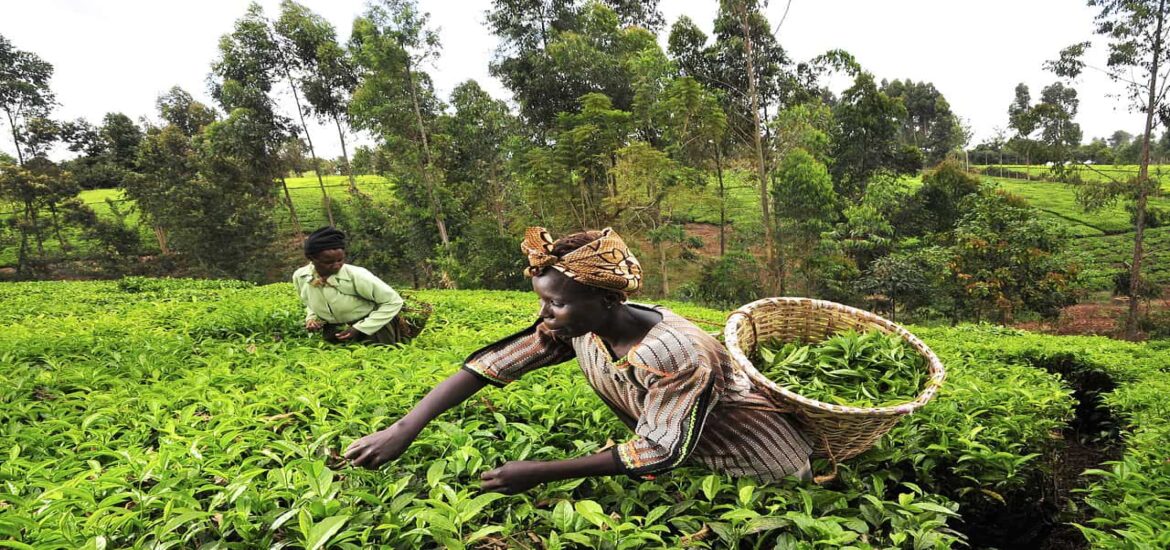
We must lower our emissions or will lose much of our food supply
(photo: Wikimedia Commons)

Extreme heatwaves, prolonged droughts and worsening floods are among features of a changing climate on a warming planet, and they will inevitably impact our food supplies. Yet just how much of an impact warming temperatures will have on agriculture and animal husbandry worldwide is hotly debated.

Now a team of scientists in Finland say they know the answer: a third of global food production, including both crops and livestock, will be at risk by the end of the century if we fail to limit warming to between 1.5°C and 2°C.

The result of that failure, they explain in a study, will be that “humanity will be forced into a new era in which past experience is of reduced validity and uncertainties increase dramatically.” In other words, much of the world will be in a climatic flux with unpredictable consequences.

Because the vast majority of global crop production takes place in areas with predictable patterns of rainfall, temperature and aridity, extreme and increasingly erratic weather will decimate crops and make large swaths of land no longer suitable for agriculture, the experts say.

“Food production as we know it developed under a fairly stable climate, during a period of slow warming that followed the last ice age,” says Matias Heino, a main author of the the study who is a doctoral candidate at Aalto University in Finland. “The continuous growth of greenhouse gas emissions may create new conditions, and food crop and livestock production just won’t have enough time to adapt,” Heino adds.

The areas most vulnerable to climate change because of their low resilience to further climate stresses are tropical South and Southeast Asia as well as the so-called Sahel region in Africa, a semiarid area stretching from the Atlantic coast to the Red Sea between the Saharan desert and the humid Guinean zone.

The scientists reached this conclusion after mapping out two future scenarios for climate change: in one CO2 emissions continue growing unhalted; in the other emissions are cut radically. They then assessed how climate change would affect 27 of the most important food crops and seven different livestock in the world while taking into account the varying capacities of different societies to adapt to climatic changes.

They found, not surprisingly, that countries worldwide would experience threats in various ways. In 52 of the 177 countries studied the entire food production would remain safe, including most European countries.

On the other hand, as much as 95 percent of current food production would fall outside of the safe climatic space in future. Especially hard hit would be countries that are already vulnerable, including Cambodia, Ghana, Guinea-Bissau, Guyana and Suriname.

“Alarmingly, these nations also have significantly less capacity to adapt to changes brought on by climate change when compared to rich Western countries,” the scientists say. “In all, 20% of the world’s crop production and 18% of livestock production under threat are located in countries with low resilience to adapt to changes.”

However, if we manage to lower our emissions significantly enough to keep warming to a relatively moderate level, we can avoid a massive blow to the global food supply, say the scientists.

“The good news is that only a fraction of food production would face as-of-yet unseen conditions if we collectively reduce emissions, so that warming would be limited to 1.5 to 2 degrees Celsius,” explains Matti Kummu, a professor of global water and food issues at Aalto University.

Most popular

Adblock test (Why?)


"much" - Google News
May 25, 2021 at 01:42PM
https://ift.tt/3vmcdCB

We must lower our emissions or will lose much of our food supply - Sustainability Times
"much" - Google News
https://ift.tt/37eLLij
Shoes Man Tutorial
Pos News Update
Meme Update
Korean Entertainment News
Japan News Update

Bagikan Berita Ini
Buffer Digg Email Facebook Google LinkedIn Pinterest Print Reddit StumbleUpon Tumblr Twitter VK Yummly

0 Response to "We must lower our emissions or will lose much of our food supply - Sustainability Times"

Post a Comment

Newer Post Older Post Home
Subscribe to: Post Comments (Atom)

Postingan Populer

  • How Google search data can predict COVID-19 outbreaks - Medical News Today
    laingali.blogspot.com New research finds that online searches can accurately predict regional increases and decreases in COVID-19 cases....
  • Research reflects how AI sees through the looking glass | Cornell Chronicle - Cornell Chronicle
    laingali.blogspot.com Things are different on the other side of the mirror. Text is backward. Clocks run counterclockwise. Cars drive on ...
  • Researcher explains how girls are socialized to have limited political ambition - NPR
    laingali.blogspot.com Mirya Holman, associate professor of political science at Tulane University, tells NPR about her research team'...
  • Weird How the White House Hasn’t Said Much About Massive Russian Cyberattack - Vanity Fair
  • How NASA's new rover will search for signs of ancient life on Mars - Science Magazine
    laingali.blogspot.com By Kelso Harper , Joel Goldberg Jul. 2, 2020 , 8:00 AM If NASA realizes its midsummer dream, a spacecraft will b...
  • How COVID curbed undergraduate research opportunities - Nature.com
    laingali.blogspot.com Credit: Getty Undergraduates often find research opportunities through university labs and government programm...
  • How This Zombie Fungus Turns Cicadas into Horror-Movie Sex Bots - Scientific American
    laingali.blogspot.com The fungus Massospora cicadina infects Brood X cicadas, causing their genitals to fall off, replaced by a white plu...
  • Why do neurons consume so much energy even when at rest? - Tech Explorist
    Like all the other parts of your body, your brain needs the energy to operate. The brain consumes about 20 percent of the body’s energy. It...
  • How Does the Federal Eviction Moratorium Work? It Depends Where You Live - The New York Times
    laingali.blogspot.com Fending off an eviction could depend on which judge a renter in financial trouble is given, despite a federal gover...
  • As they elect a governor, Virginia voters show how all politics have become national - NPR
    laingali.blogspot.com Enlarge this image In Virginia's race for governor, Republican candidate Glenn Youngkin has rallied vote...

About Me

Jihan Sari
View my complete profile

Arsip Blog

  • ►  2022 (181)
    • ►  March (35)
    • ►  February (70)
    • ►  January (76)
  • ▼  2021 (5678)
    • ►  December (128)
    • ►  November (475)
    • ►  October (533)
    • ►  September (490)
    • ►  August (467)
    • ►  July (526)
    • ►  June (513)
    • ▼  May (511)
      • How FEMA's COVID-19 Funeral Assistance Program Is ...
      • Experts Offer Help For Those Who've Forgotten How ...
      • Floyd Mayweather vs. Logan Paul purse: How much mo...
      • Yes, FC Cincinnati is better…but that isn’t saying...
      • How bad is Google Photos’ compression anyway? - Th...
      • How the ‘Wandering Meatloaf’ Got Its Rock-Hard Tee...
      • How Dogs Are on The Covid-19 Front Lines - The New...
      • How Tulsa Race Massacre Shaped Today's Most Succes...
      • How To Be A Citizen: The Role Of Protest - NPR
      • How long will rising inflation last? We polled 30 ...
      • ‘Mare of Easttown’ Finale: Much More Than Just the...
      • Heartbroken mom believes daughter died from chewin...
      • Dear Penny: How much do I spend on my new co-worke...
      • How to Know When Inflation Is Here to Stay - The W...
      • How to Negotiate with Ransomware Hackers - The New...
      • Morrison Grove apartments receive much-needed reno...
      • From One Child to Three: How China’s Family Planni...
      • Brain fog? Why you may be struggling to think clea...
      • Rains provide much needed relief from dry conditio...
      • How the Texas voting bill would have created hurdl...
      • HBO Max Blacks Out Before Much-Anticipated ‘Mare O...
      • How much money each player won at the Charles Schw...
      • Can I Just Tell You: With So Much To Mourn, We Mus...
      • How We Can Acknowledge And Recognize Pandemic Grie...
      • How Many National Parks Are There? Depends How You...
      • Can I Just Tell You: With So Much To Mourn, We Mus...
      • Child tax credit calculator 2021: How much will yo...
      • How to send an item from Amazon as a gift so peopl...
      • Sign In with Apple is a must for iPhone users. Her...
      • How to watch the Indy 500, and everything else you...
      • Burned from the land: How 60 years of racial viole...
      • It's Memorial Day weekend—here's how much a cheese...
      • Thinking about adopting a pet? Here's how much it ...
      • How Belarus 'hijacking' has redrawn Europe's air m...
      • How the Religious Right Made Same-Sex Marriage a G...
      • Thinking about adopting a pet? Here's how much it ...
      • Mine near Las Vegas produces much of world’s rare ...
      • D.C.-area forecast: Another clunker today before a...
      • As a negotiator, Biden leaves GOP senators unsure ...
      • Chelsea beat Man City, claim Champions League glor...
      • In the Coming Megaquake, How Much Warning Will the...
      • Champions League prize money: How much do Chelsea ...
      • Liza Horvath, Senior Advocate: ‘I have too much st...
      • How fires, pandemic, regulations are impacting Cal...
      • Indy 500 purse, payout breakdown: How much prize m...
      • Examining the Impact: How Oklahoma's New Laws Will...
      • How Much Higher Are COVID-19 Rates Among Unvaccina...
      • Secret Chats Show How Cybergang Became a Ransomwar...
      • How to Reconnect With Friends In Person as the Pan...
      • 'Friends Reunion': How the Sitcom Helps People Lea...
      • How to Win a Bidding War Before It Starts - The Ne...
      • He’s not slow, he’s thinking too much - State Of T...
      • How Mitch McConnell killed the US Capitol attack c...
      • How to Take a Break - The New York Times
      • How Memorial Day Weekend Travel in U.S. May Be Dif...
      • How Trump's Influence On Republicans May Affect Oh...
      • How much can McKenzie Milton improve before Notre ...
      • Japan extends COVID emergency for much of country ...
      • NHL playoffs: Bruins, Islanders have much in commo...
      • Elizabeth Holmes’ lawyers want to know how often j...
      • How did Tim Tebow look in his first Jaguars practi...
      • How Exxon Lost a Board Battle With a Small Hedge F...
      • Former Bears TE Zach Miller releases first country...
      • Report: How Much Do Students Pay For Corporate Tax...
      • 76% of older millennials are worried about climate...
      • How To Answer Heartbreaking COVID-19 Questions Fro...
      • Suze Orman: Here's how you should calculate your n...
      • How to Avoid the 5 Worst Entryway-Decorating Mista...
      • There Is So Much You Don’t Know About Being a Fly ...
      • How to optimize your follow-up after applying for ...
      • Norway concerned NATO chief taking on too much wit...
      • How much money do IndyCar drivers make? - IndyStar
      • 7th Fleet CO: Deployed LCS USS Gabrielle Giffords ...
      • How to Buy Happiness (Responsibly) - The New York ...
      • A Path To Peace: How A Former Navy Corpsman Honors...
      • How Ranked-Choice Voting Could Affect New York’s M...
      • How uplifting art shows are easing us out of lockd...
      • Change is coming to the Penguins, but how much? - ...
      • Champions League prize money breakdown: How much d...
      • Area Boys Tennis: Aitkin's Much advances to state ...
      • How to Talk to Employees About Reopening - Harvard...
      • How Much Watching Time Do You Have This Weekend? -...
      • Parasites as fountains of youth: Study finds infec...
      • How to Measure Inclusion in the Workplace - Harvar...
      • How the Insurance Industry Could Bring Down Fossil...
      • International Travel Opens To The Vaccinated, But ...
      • Amazon bought MGM for $8.5 billion. Here's how muc...
      • Child tax credit: How much money will your family ...
      • How Trump got a Bush to bend the knee - POLITICO
      • How the Texas Legislature could reform the state's...
      • Koch network hasn't yet engaged much with White Ho...
      • How Taylor Hall's prior career stops led to his 20...
      • How to Talk Retirement Savings With Your Spouse - ...
      • 'Dear Son': How A Mom's Letter Inspired A Graduati...
      • How This Zombie Fungus Turns Cicadas into Horror-M...
      • Recovering From Airstrikes, Gazans Consider How To...
      • Crypto Billionaire Explains How To Get Best ROI On...
      • How Congress Has Undermined Gun Regulators - The N...
      • Europe's much-criticized pursuit of Chinese cash m...
      • Turning less humid and much cooler tonight, severa...
    • ►  April (495)
    • ►  March (539)
    • ►  February (457)
    • ►  January (544)
  • ►  2020 (5133)
    • ►  December (568)
    • ►  November (608)
    • ►  October (553)
    • ►  September (568)
    • ►  August (584)
    • ►  July (557)
    • ►  June (538)
    • ►  May (354)
    • ►  April (200)
    • ►  March (263)
    • ►  February (253)
    • ►  January (87)
  • ►  2019 (2433)
    • ►  November (537)
    • ►  October (706)
    • ►  September (654)
    • ►  August (536)

Labels

  • How
  • Much
Powered by Blogger.
Copyright 2016 Lain Gali
Design by Mas Sugeng - Uploaded by Santri Drajat